The Golden Ringlet, a poem by Amelia
In honor of World Poetry Day 2026 and Women’s History Month, I have another poem about hair to share with you - The Golden Ringlet, written by the American Victorian-era poet Amelia B. Welby (1819–1852), who often published under the pseudonym “Amelia.”
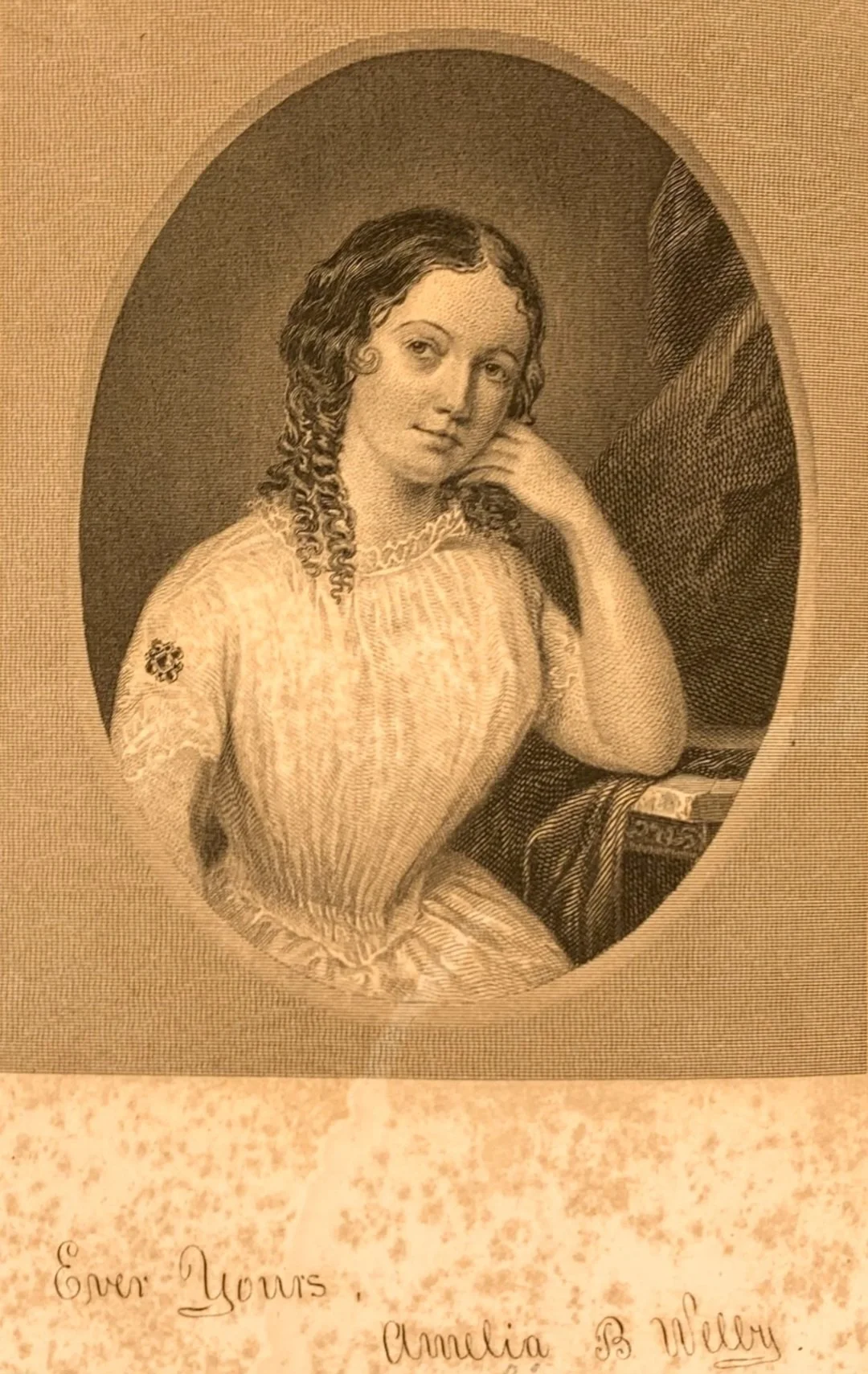
Born in Saint Michaels, Maryland on February 3, 1819, she relocated to Kentucky with her family at around the age of 15, where they eventually took up residence in Louisville.
Amelia began writing poetry for the Louisville Journal at age 18 and was soon recognized as one of the most talented women writers in the “American West.”
Amelia Welby’s poetry is characterized by a melodic, rhythmic style that captured the mid-19th-century fascination with the cult of sentimentality. Her work frequently explores themes of pious mourning, the beauty of death, and the power of memory, often using nature, like moonlight and twilight, to mirror deep-seated grief and spiritual hope. Titles include The Bereaved, The Dying Girl, The Dying Mother, The First Death of the Household, The Mournful Heart, and Sudden Death.
The Golden Ringlet first appeared in the Louisville Journal around the early 1840s and was later included in her collected volume, Poems by Amelia, first published in 1844.
This abridged version was published in the ‘Artistic Hair Work’ chapter of The Universal Instructor in Home Arts, 1881 by A. Marston Raymond. In reality, Raymond offers little to nothing in the way of actual instructions on how to create hair flowers, largely due to a characteristically Victorian writing style that is archaic, obscure, and overly flowery, but he shares with us this lovely poem, nonetheless.
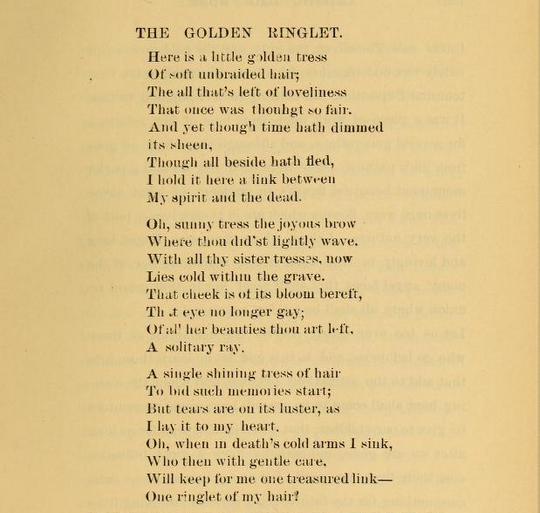
The Golden Ringlet
Here is a little golden tress
Of soft unbraided hair;
The all that's left of loveliness
That once was thought so fair.
And yet though time hath dimmed its sheen,
Though all beside hath fled,
I hold it here a link between
My spirit and the dead.
Oh, sunny tress the joyous brow
Where thou did'st lightly wave,
With all they sister tresses, now
Lies cold within the grave.
That cheek is of its bloom befreft,
That eye no longer gay;
Of all her beauties thou art left,
A solitary ray.
A single shining tress of hair
To bid such memories start;
But tears are on its luster, as
I lay it to my heart.
Oh, when in death's cold arms I sink,
Who then with gentle care,
Will keep for me one treasured link -
One ringlet of my hair?
It is difficult to overstate how incredibly popular Amelia was in her time. After her initial success in Louisville, the major publisher D. Appleton & Company bought the rights to her work and released 15 editions in 15 years.
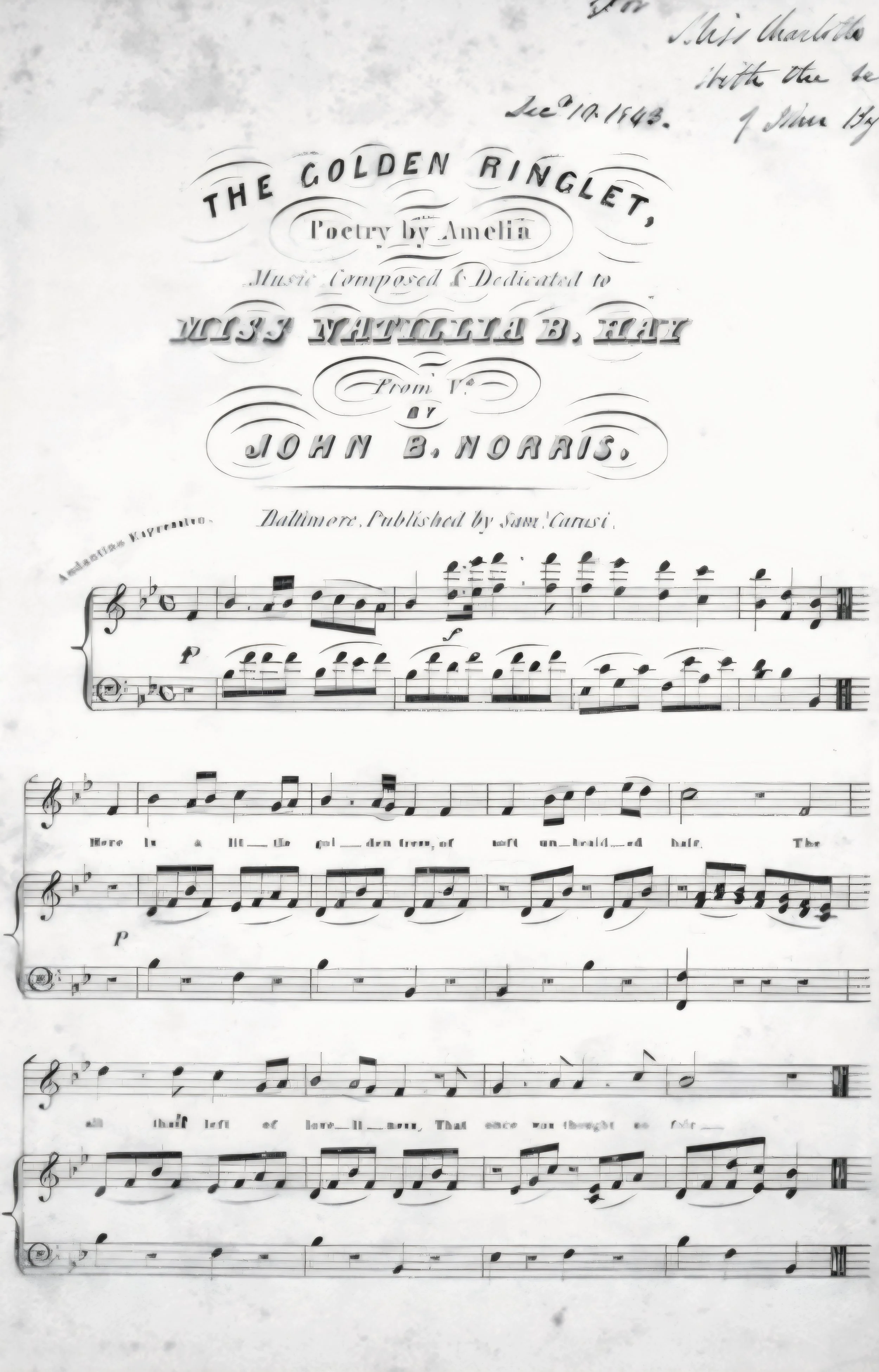
Because of their melodic style and popularity, many of her poems, including The Golden Ringlet, were set to music.
Edgar Allan Poe was one of her most vocal supporters. He praised her "light melody" and "varied fancy," though he, as well as other critics, noted her tendency toward "diffuseness" - essentially, she was so focused on the emotional "vibe" that her poems could become repetitive or overly long.
In 1838, at age nineteen, Amelia married a merchant, George B. Welby. She died in 1852 at age 33. She was the mother of a son, who was two months old at the time of her passing. Upon her death, many lamented that she did not have time enough to do more.
The Duke University Libraries Repository hosts a digital collection of papers related to Amelia, her work, and her extended family, including correspondences regarding legal disputes over land and the placement of a monument (possibly the one on Amelia's grave). Also included are letters written by her husband George to Amelia’s cousin, who expresses his experience raising their newborn son since Amelia's death, including the resulting difficulties of housekeeping, and his inability to be separated from the boy - his last link to Amelia - or to even entertain the suggestion of sending him to be raised by family members.
© 2026 Diane Irby. All rights reserved. This content may not be copied or distributed without written permission from the author.
To cite this essay:
Irby, Diane. “The Golden Ringlet, a poem by Amelia.” Victorian Hairwork by dirby.art (victorianhairwork.art), November 2025. https://www.victorianhairwork.art/journal-research/the-golden-ringlet-a-poem-by-amelia.
Bibliography:
Welby, Amelia. “The Golden Ringlet.” The Universal Instructor in Home Arts, by A. Marston Raymond, [Publisher], 1881, pp. [Numbers]. Abridged version.