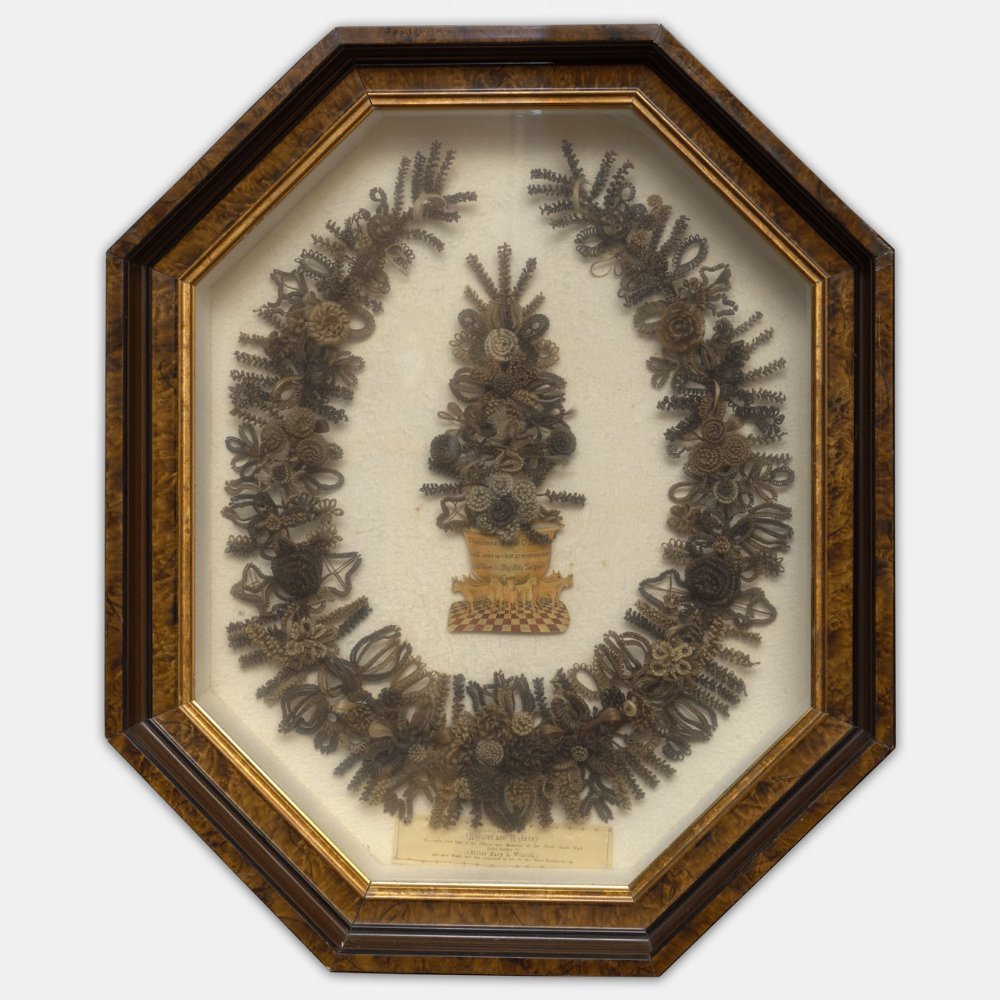
The Sacred Hair Wreaths of Mormon Pioneers
Beyond "parlor art" for the middle class, this research explores the sophisticated role of Victorian hair wreaths as a material record of Mormon pioneer life, ecclesiastical agency they granted women, and the intentional documentation of women's labor.

Hair Flowers Poem, 1877
Discover a rare 1877 poem, "Hair Flowers" by Mrs. S.A. Wachter, published in the Catoctin Clarion, which offers an intimate look into the role of Victorian hairwork as a treasured material language of memory and sentiment, demonstrating the skillful artistry of its makers.

Gender, Class, and the Social Function of Victorian Hairwork Flowers and Wreaths
Victorian hairwork wirework hair flowers and wreaths embodied class, gender, and emotional labor. Learn how their role as handmade domestic art reflected women’s cultural expectations and the performative expression of sentiment in the 19th-century home.

Cultural Meaning in Victorian Hairwork Wirework Hair Flowers & Wreaths
Discover the cultural significance of Victorian wirework hair flowers and wreaths - handmade keepsakes crafted from human hair that symbolized memory, affection, and family legacy in 19th-century life.
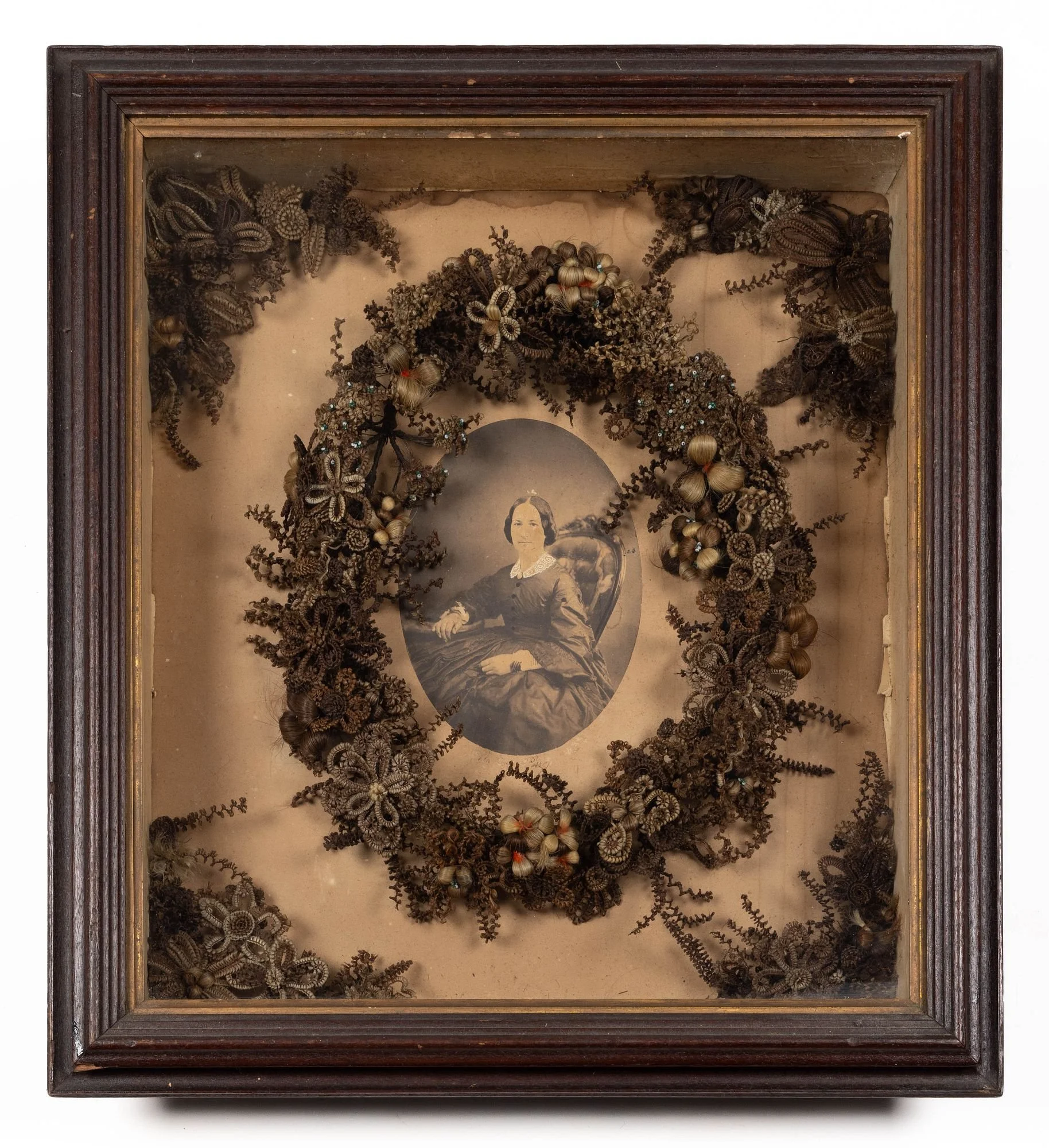
A Delicate Thread: Victorian Hairwork, Wirework Hair Flowers, and the Craft of Sentiment
Victorian hairwork wirework hair flowers: intricate keepsakes crafted from human hair. Explore their history, meaning, and the art of this sentimental 19th-century craft.
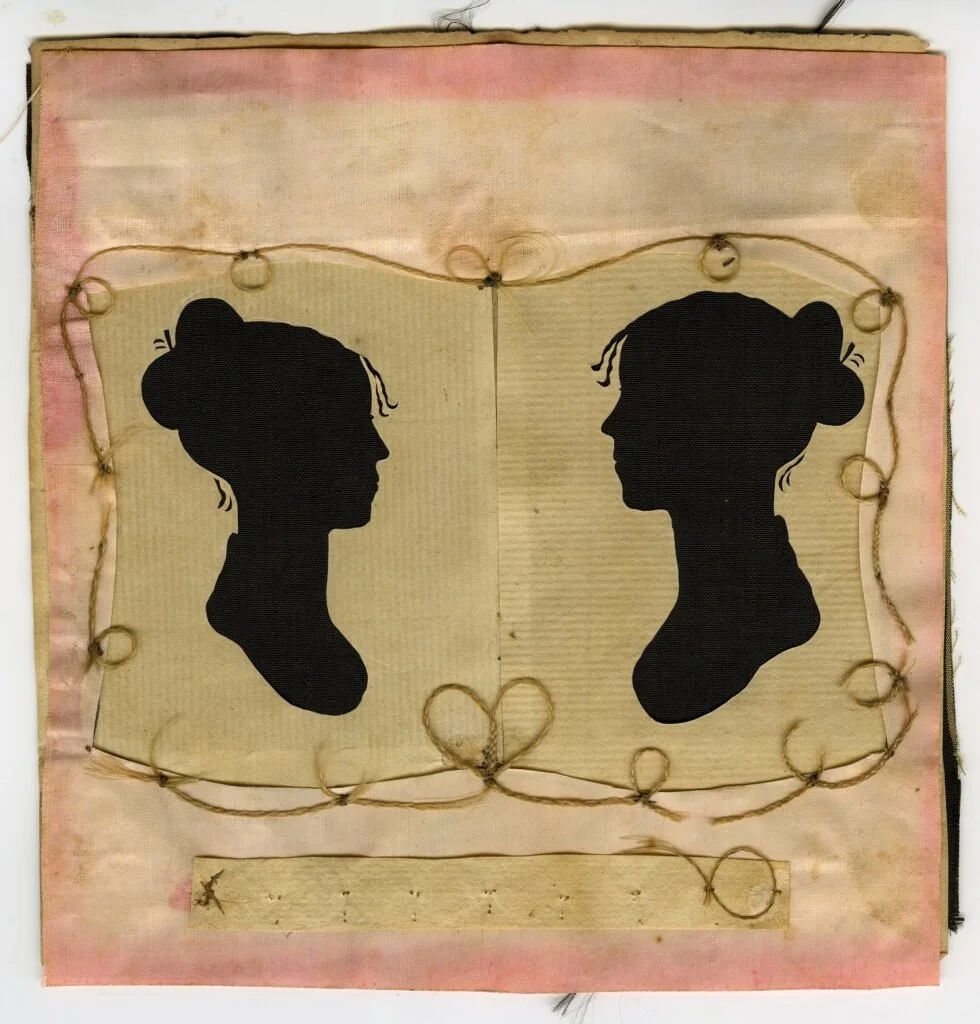
The Double Silhouette: Celebrating Pride Month through the Victorian Hairwork of Sylvia Drake and Charity Bryant
Explore the story of Sylvia Drake and Charity Bryant, a same-gender couple in early America, through their braided hair silhouette. This Victorian-era artwork honors their 44-year partnership, blending material culture, love, and LGBTQ+ history in a rare and moving work of hairwork art.

Think of a tea set made of a lover’s hair!
At the 1853 New York Crystal Palace Exhibition, Linherr & Co. stunned visitors with delicate hairwork jewelry - including a tea set made from human hair. This innovative display redefined sentimental and mourning art and helped introduce hairwork as a fashionable craft in the U.S.

Reviving the Tradition of Hairwork, Preserving Heritage and Artistry
Reviving the nearly forgotten art of hairwork helps preserve American cultural heritage, celebrates feminine creativity, and offers a sustainable, emotionally resonant form of artistic expression rooted in 19th-century traditions.